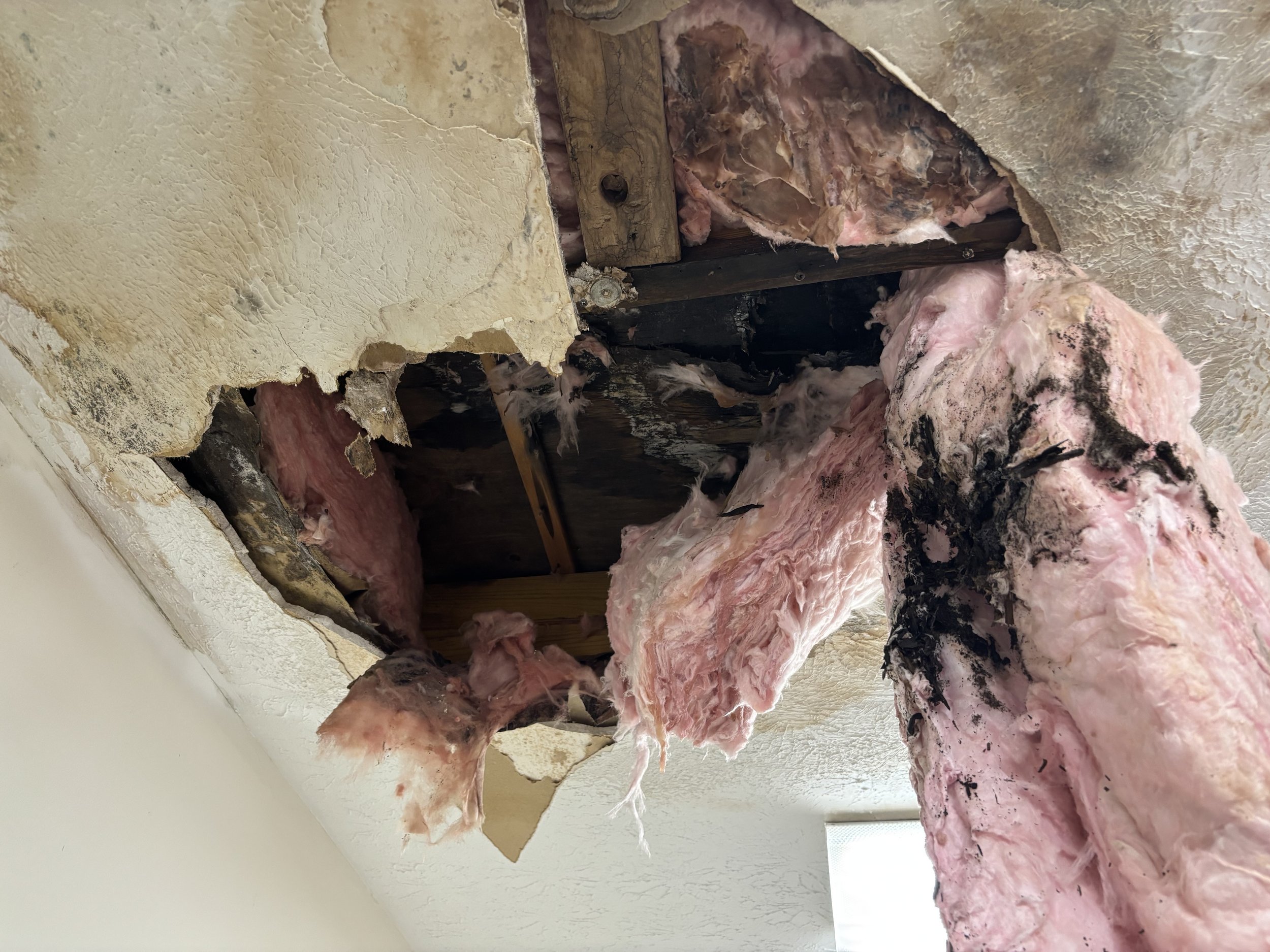
I came home from a 10-day, five-city speaking tour and walked into my office to find this.
My ceiling had collapsed because of water damage.
Not exactly the welcome-home surprise I was hoping for.
But here's what was interesting.
During those 10 days, four significant things happened:
✅ I had five speaking engagements in five cities.
🏆 I was notified that I was being honored with an Economic Empowerment Award.
😳 My office ceiling collapsed.
✈️ Less than 48 hours later, my wife told me about a Delta flash sale, and we booked a trip to Paris using miles. Our taxes were only $464.
One of those four things was bad.
And there was absolutely nothing I could do about the leak.
The leak was the property owner's responsibility.
So I gathered the things in my office that I could save, did what needed to be done, and moved on.
Why?
Because continuing to focus on something I couldn't control wouldn't change the situation.
Personal finance works the same way.
Sometimes an unexpected expense shows up.
A car breaks down.
A medical bill arrives.
A job changes.
A major home repair is needed.
The goal isn't to create a financial life where nothing ever goes wrong.
The goal is to build a financial life that can absorb the unexpected without allowing one setback to take over the entire story.
That's why I talk so much about financial fitness.
Your financial plan isn't just about saving money when things are going well.
It's also about having enough margin, liquidity, and perspective to say:
“This is a problem. Now, what's the next thing I can control?”
The ceiling falling wasn't something I could control.
What I did next was.
And sometimes, that's the best financial move you can make.
Focus on what you can control.
Take the appropriate action.
Then keep moving.


